
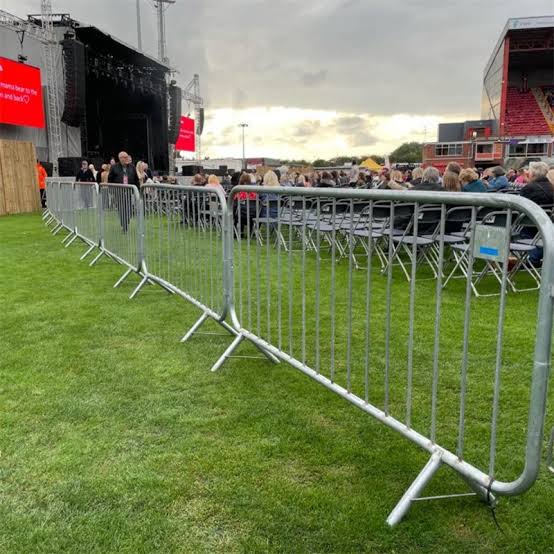
Well-run events depend on visible order long before crowds reach peak density. People respond faster to clear physical cues than to shouted instructions or printed notices. Crowd control barriers provide organisers with a readable framework for movement, waiting, and restricted access. At school fetes, concerts, sporting fixtures, and civic gatherings, these temporary structures help contain drift, reduce friction at entry points, and support safer conditions without making the venue feel closed or hostile.
Directing Movement
Guests usually scan the space first, then decide where to walk, pause, or queue. That early reading of a site matters because confusion spreads quickly near gates and crossing points. In many layouts, crowd barrier hire becomes a practical planning choice, as barriers form lanes, mark holding areas, and separate opposing streams before pressure builds. With those boundaries in place, arrivals move with more confidence, and staff spend less time correcting avoidable wandering.
Preventing Bottlenecks
Congestion tends to start in predictable places, near narrow paths, blind corners, food counters, and bag checks. A barrier line can remove uncertainty by showing exactly where one stream ends and another begins. That separation reduces abrupt stopping and side entry. Teams also gain a clearer view of developing pressure, which helps them adjust staffing, reopen space, or redirect people before delays spread wider.
Protecting Key Areas
Every venue contains operational zones that should remain clear of obstructions, including loading bays, cable runs, stage access points, first aid posts, and broadcast positions. Barriers create a firm edge around those locations without heavy construction or visual clutter. Visitors can still read the layout easily. Crews, meanwhile, keep enough room for equipment movement, timed deliveries, and urgent access when conditions become busy or noisy.
Supporting Emergency Routes
Emergency response works best when routes remain open, visible, and free from spillover. Barriers help preserve those corridors by stopping queues from bending into exit paths or medical access lanes. That simple control can shorten response time during a fall, heat issue, or crowd surge. Clear passageways also support steadier behaviour, as people follow instructions better when escape routes look obvious rather than improvised.
Improving Queue Quality
Queue design shapes mood more than many organisers expect. A line with clear edges feels fair, while an open cluster often creates tension, cutting, and repeated questions. Barriers define where waiting starts, how it turns, and where service ends. That structure suits ticketing, food sales, transport boarding, and security checks. People usually stay calmer when progress is visible, and lane boundaries leave little room for dispute.
Helping Staff Work Better
Frontline staff perform best when the site itself supports their directions. Barriers reduce the need for constant hand signals and repeated verbal corrections because the space already communicates basic rules. That frees stewards to check passes, answer concerns, and watch behaviour with greater attention. During larger gatherings, small savings at each interaction add up quickly, improving throughput and lowering fatigue across a full shift.
Matching Different Event Sizes
Temporary barriers suit both small community functions and major public programmes. A market may need short runs near vehicle gaps, cash points, or food clusters. A concert often requires longer channels at entrances, merchandise areas, and taxi ranks. Sporting venues use them near turnstiles, media compounds, and team access routes. Flexible placement lets organisers respond to changes in attendance, ground shape, weather, and timing.
Adding Measurable Control
Strong event planning relies on observable patterns rather than guesswork. Barriers make movement easier to measure by defining lanes, pauses, and transfer points. Teams can compare queue length, entry speed, and dwell time across different zones. Those figures reveal where layouts worked and where they strained. Over several events, the evidence supports sharper staffing plans, cleaner circulation, and fewer incidents linked to uncertainty or crowd compression.
Conclusion
Crowd control barriers contribute far more than a simple physical boundary. They shape movement, protect operational space, support emergency access, and give staff a clearer structure for decision-making under pressure. Their strength lies in immediate visual guidance that people can understand quickly, even in loud or crowded settings. For organisers seeking smoother operations, better flow, and lower risk, barriers remain a practical tool that consistently adds value across many event types.